All posts
When AI builds faster than your team can agree
Faster coding agents don't remove planning, review or testing. LightSprint keeps that work connected in shared sessions on your existing codebase.
LightSprint
October 3, 2026
SDLC
ai-agents
product-development
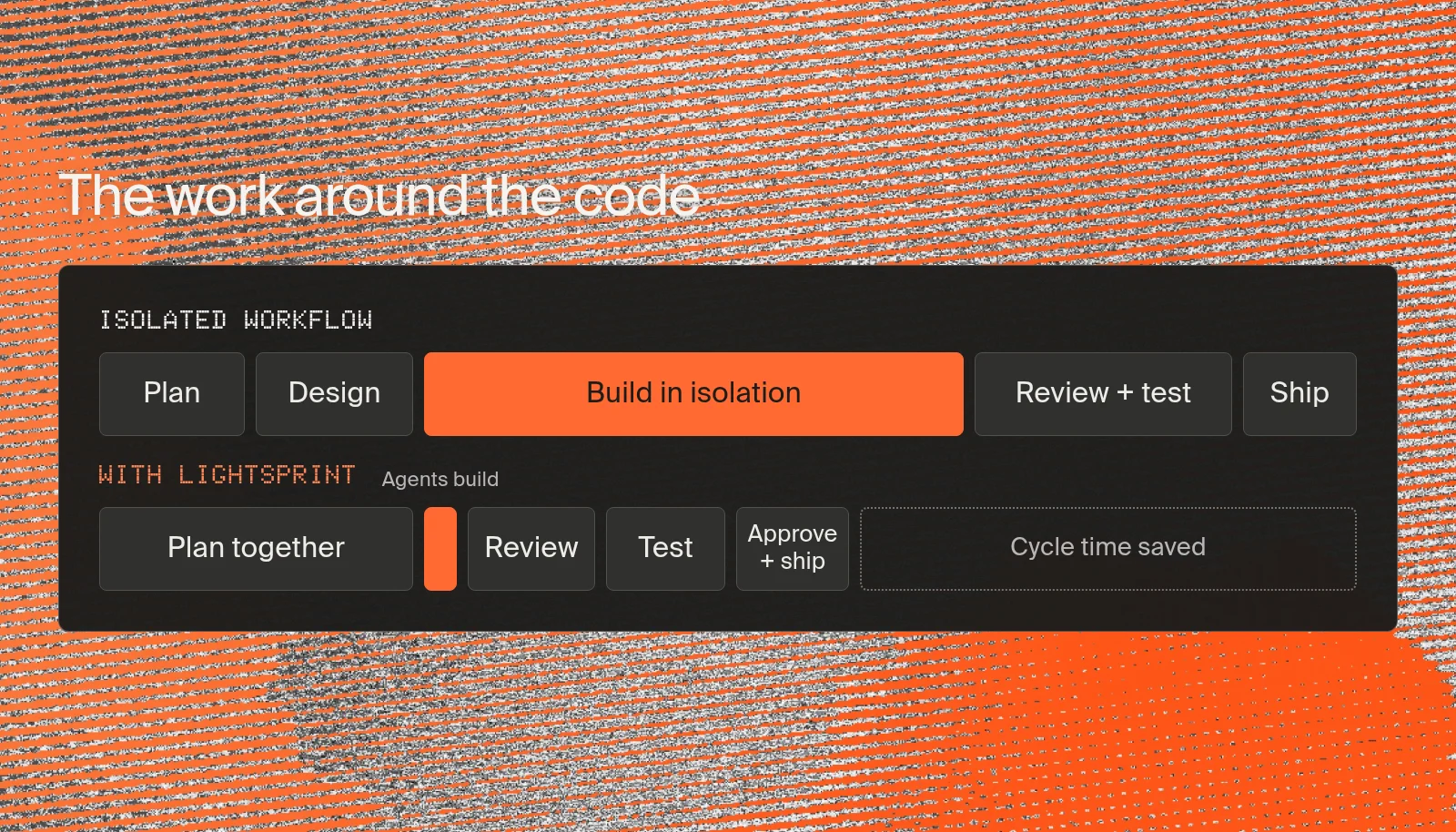
Lightsprint saves cycle time through collaborative planning and the workflow around review and testing
Coding agents can produce an implementation before the team has finished agreeing on what it should do.
That sounds like progress. Sometimes it is. But a faster build doesn't answer the questions around it. Are we solving the right problem? Does this fit the product we already have? Has anyone checked the behavior? Who is comfortable approving the change?
In The AI-native SDLC playbook, Anthropic argues that as code generation gets faster, the bottleneck moves to the work around the build. Planning, review, testing and deployment still have to keep up.
We think that's the important part. The opportunity is to help the whole team get from an idea to a change they understand and can safely ship. That's where LightSprint fits.
Planning gives the agent the right problem
A coding agent can act on a request. It can't make a vague request stop being vague just by writing more code.
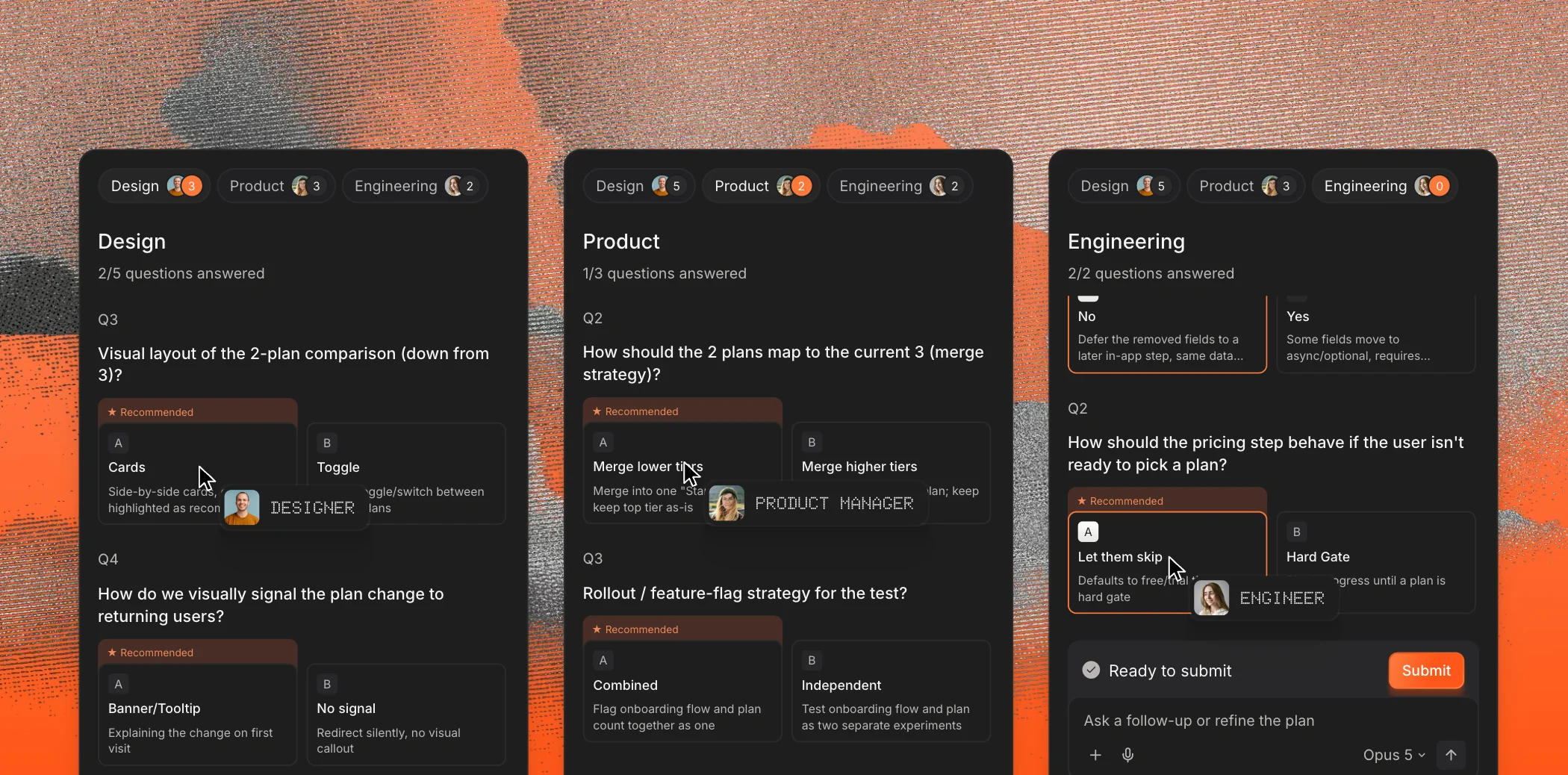
Before implementation, someone needs to explain the outcome, the constraints and what must stay unchanged. Product needs to clarify the behavior. Design needs to consider the flows and states. Engineering needs to check how the change fits the existing system.
For an existing product, that conversation needs the codebase in it. A plan that assumes the wrong permission model or invents an API can look convincing right up until someone tries to build it.
LightSprint brings shared codebase context, past decisions and team conventions into the session. PMs, designers and engineers can work with the agent on the same change, rather than each starting a separate conversation and reconstructing the context.
The point of planning is to expose the assumptions while they're still cheap to change.
Review keeps the team in the work
Review is more useful when it happens before everyone thinks the work is finished.
An engineer can check the implementation approach. A designer can spot a missing state. A PM can notice that the agent solved a different problem from the one intended. Those are different judgments, and a final code diff isn't always the best place to make all of them.
People need something concrete to respond to. A working preview lets them try the flow, see what the agent understood and ask for a correction while the change is still being built.
In LightSprint, teammates can join the shared agent session and inspect the live preview. The review hub brings together agent feedback and screenshots checked against the spec. Engineering still controls merge through the team's existing review and approval rules.
That keeps product feedback close to implementation without turning feedback into permission to ship.
Testing turns generated code into evidence
An agent saying it has finished isn't evidence that the change works.
Tests need to cover the intended behavior and the things the change could break. The team also needs to run the product. A passing test suite won't tell a PM that a workflow is confusing, and a convincing preview won't prove that access controls are correct.
Those checks belong together. Automated tests check repeatable behavior. Product review checks whether the experience solves the problem. Engineering decides whether the evidence is enough for the risk involved.
LightSprint gives each task an isolated full-stack environment where the agent can test its work and the team can inspect a preview. The change still becomes a pull request, with branch rules, required reviews and GitHub Actions in the release path.
The sandbox makes it possible to try the change before production. It doesn't remove the need for tests or an accountable approval decision.
LightSprint is the work around the agent
The coding agent handles implementation. LightSprint connects the work that tells it what to build, lets the team steer it and helps them judge the result.
Shared context supports planning. Shared sessions and previews support review. Isolated environments support testing. Pull requests and engineering controls keep approval attached to the change.
These aren't separate administrative steps to rush through once the code is ready. They're how a team decides whether the code is worth shipping. If implementation gets faster but the context, feedback and evidence stay scattered, the team is still waiting.
That's our view of an AI-native SDLC. Better agents matter. So does the workflow around them.