Backed by
Ship together on
your existing codebase
PMs, designers, and engineers plan, build, and ship in one shared session. Like Google Docs for coding agents.
Shorten the onboarding flow.
 Product Manager
Now everyone on your team can ship.
Describe the change in plain English. LightSprint builds it, spins up a live preview, and prepares for engineering review.
 Designer
 Marketer
Built for the codebase you already
have.
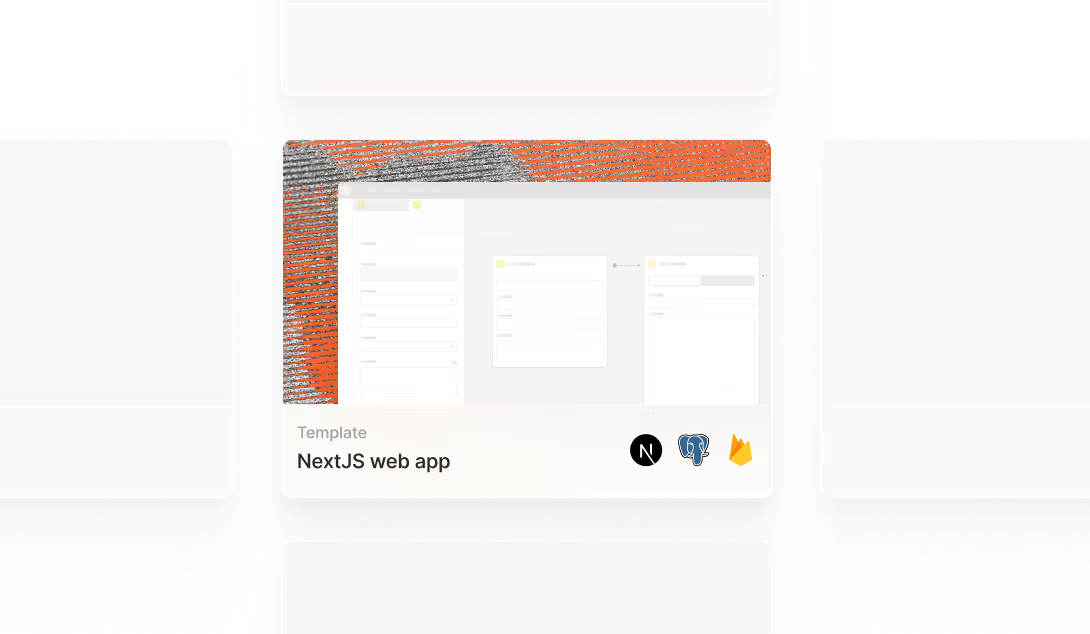
LightSprint works with complex codebases across multiple repositories. Connect them, and it learns your conventions before proposing anything.

Use existing codebase
Learns your structure and style, works inside your current stack with no migration or rewrite, and ships changes that fit the patterns your team already uses.
Any model, no markup
Bring your own API keys or existing Codex and Claude subscriptions, or pick any model through OpenRouter. No lock-in, no markup on inference.
Works with tools you already trust
Engineering sets up once,
scales to the whole team.
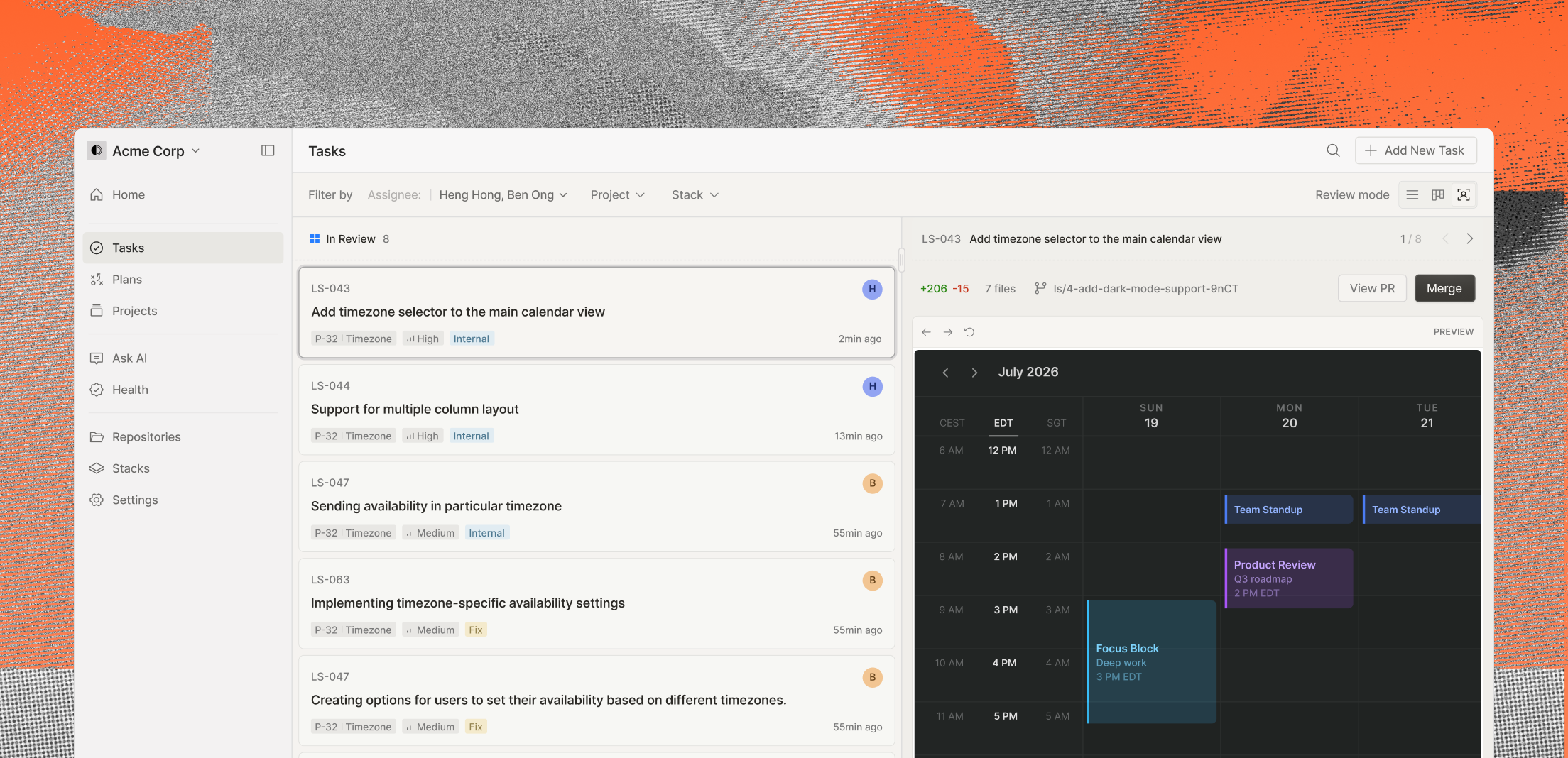
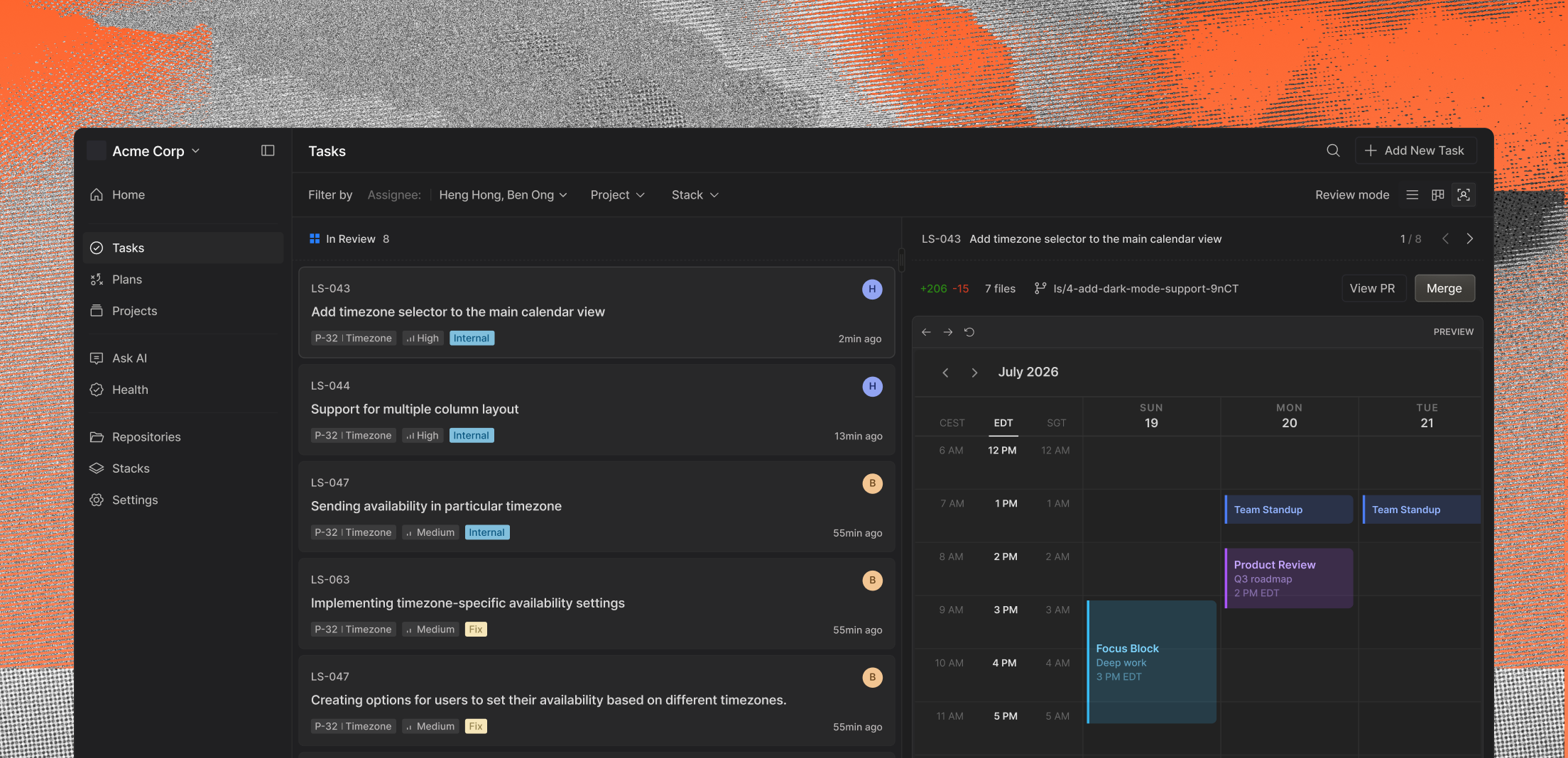
LightSprint's onboarding agent will set up your codebase, environment variables and setup script automatically. Preview your web or mobile app live in a sandbox.
Marketer

Designer

Developer
Shared Skills
Save a skill once design.md for your design system, review.md for code standards. Every teammate or AI agent can pull from it instantly.
Shared Context
The AI already knows your codebase, past decisions, and conventions. No re-explaining, no knowledge trapped in one person's head.
Update plan
The task is about the "onboarding
Updating onboarding.ts

engineer
Add database logic
Shared Session
Every change runs in a live, shareable preview. Anyone on the team can hop in, watch it build, and weigh in. No local setup needed.
Ship the right
features faster.
Preview the result exactly as your users will see it, then ship with one click. Undo is always one click away.
Product
Ship what customers actually want
Design
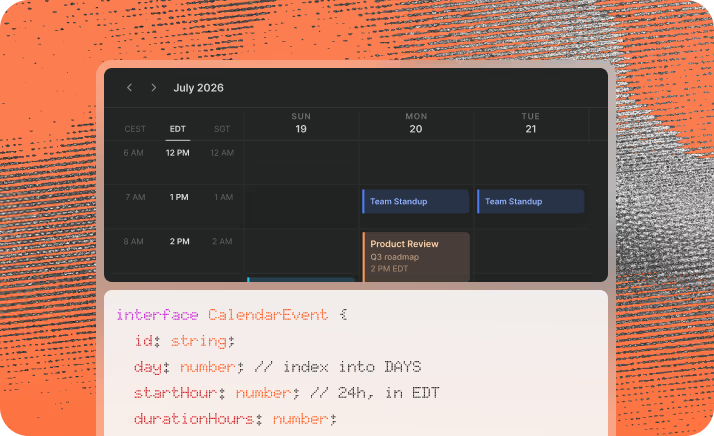
Make designs changes without waiting on engineering
Engineering
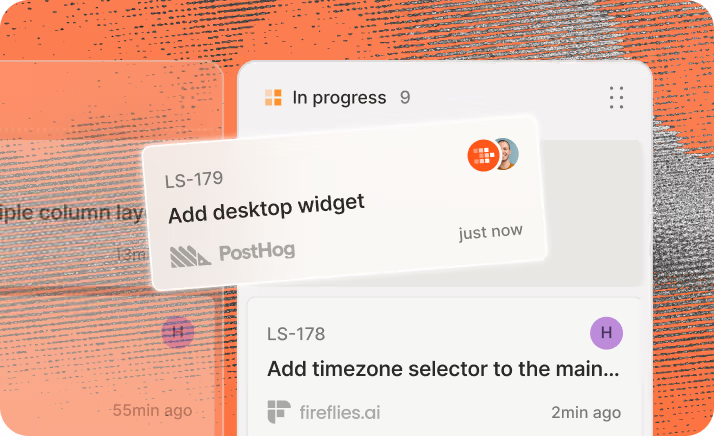
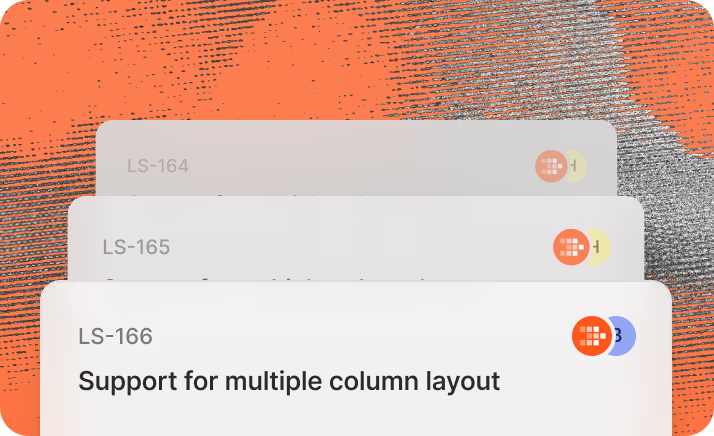
Increase velocity with parallel agents
The software factory trusted by teams
We've been able to now accelerate product development dramatically by allowing PMs and designers to ship. Love the collaborative process on LightSprint!

Lucas Lee
Head of Product, Arc
We run dev and BD workflows on LightSprint - shared agent sessions and per-task previews eliminated the handoff friction between teams. Founding team is super responsive too.

Jason Chin
Managing Director, TransactCloud
Managing agents with LightSprint is a game-changer as we can share the same agent sessions and steer together. Feels like Google docs for agents.

Alberto Rosas
CEO, Didit
We send tickets from Linear and Slack directly into LightSprint, and its agents use our team’s shared skills and context to help build features, triage bugs, and work through the engineering backlog much faster.

Bladen Lam
CTO, Fuzzy
What impressed me is the way LightSprint helps with the planning process - designers, pms and devs can come up with a really good spec before giving it to an agent to one-shot.

Justin Chong
Head of Product, Chirp
LightSprint's plan mode allows me as a non-technical builder come up with different design variations for stronger alignment with my team.

Jarren Koh
Product Manager, Carousell
Coding agents run solo in one developer's IDE while the rest of the team falls out of sync. LightSprint is rebuilding the SDLC for the AI era.

Zhilin Wang
CTO, Metix AI
Frequently asked questions
How is LightSprint different from Claude, Codex, or Cursor?
Claude, Codex, and Cursor are coding agents. LightSprint is the workspace that lets your entire product team use them together.
Instead of agent sessions living with one developer, LightSprint gives your team shared context, shared skills, cloud sandboxes, live previews, automated verification, and an approval workflow before anything ships.
You can keep using the models and coding tools you already like — LightSprint adds the collaboration and guardrails around them.
Is LightSprint more expensive than using AI models directly? Can I use my existing subscription?
LightSprint doesn't mark up model inference.
Bring your own API keys or use existing Codex and Claude subscriptions, or choose another model through OpenRouter. You're paying LightSprint for the infrastructure around the models: cloud execution, shared context, previews, collaboration, testing, and team controls.
How secure is LightSprint? What happens to our code and data?
Your team controls which repositories and models LightSprint can access.
Work runs in isolated cloud sandboxes, and those environments are destroyed after the work is complete. You choose the model provider, and LightSprint can also work with your own LLM gateway.
Every code change remains auditable through your existing GitHub workflow, and nothing can bypass the approval rules your engineering team configures.
What tools does LightSprint support? Will it fit into our existing workflow?
LightSprint is built to work with the stack you already have rather than replace it.
Connect your existing codebase and repositories, keep your GitHub review and CI workflows, and use agents like Claude and Codex. Your team can also send work into LightSprint from tools such as Slack and Linear.
Engineering sets up the environment, shared skills, and guardrails once, then the rest of the team can build within those constraints.
I'm not an engineer. Can I actually use LightSprint safely?
Yes — that's one of the main reasons LightSprint exists.
You describe what you want in plain English, plan the change visually, launch an agent, and review the result in a live sandbox without needing to understand Git or set up a development environment.
Non-engineers don't get a shortcut around engineering. Every change follows the approval workflow your team configures, so engineers still control what reaches production.
designer
This needs to contain instructions to interview the user if they skip onboarding